
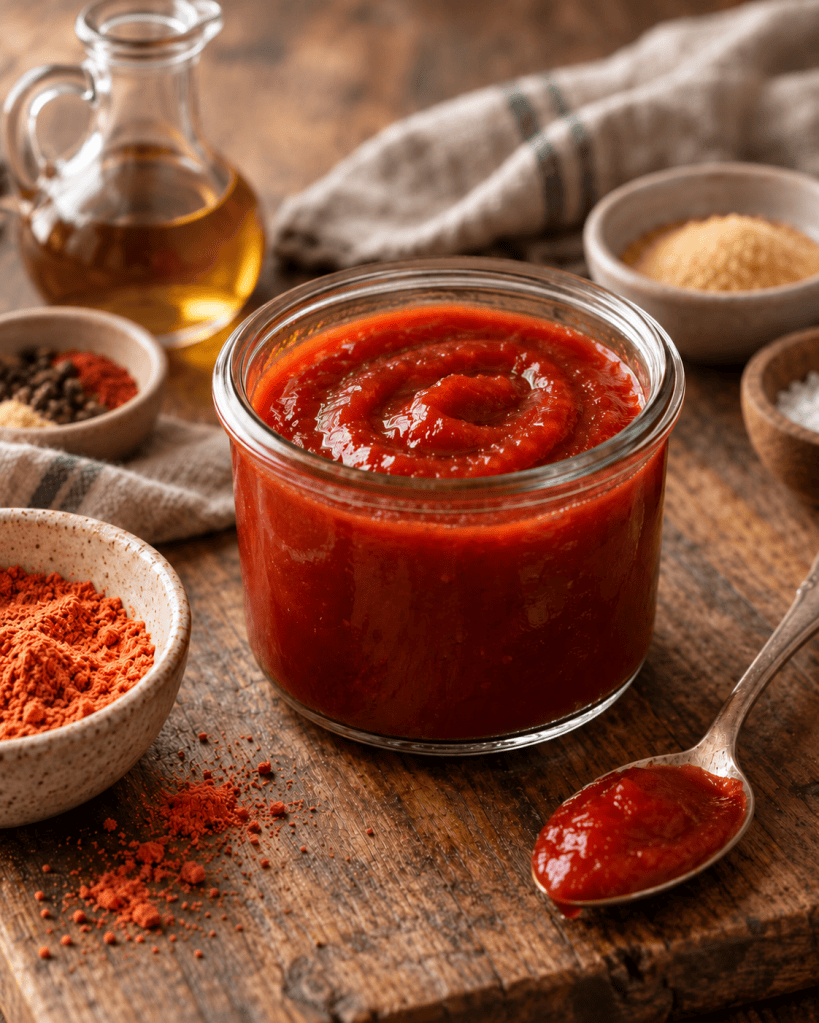
This homemade tomato ketchup turns a simple pantry staple into a rich, tangy condiment in about 20 minutes. Made with tomato powder, vinegar, a little sweetness, and warm spices, it’s easy to adjust to your taste and requires no fresh tomatoes. A practical, flavorful alternative to bottled ketchup that’s especially useful when you’re cooking from what you have on hand.
Makes: Approximately 1½–2 cups, depending on consistency
Prep Time: 5 minutes
Cook Time: 10–15 minutes
Total Time: 15–20 minutes
Ingredients
- ½ cup tomato powder
- ¾–1 cup water, divided
- 2–3 Tbsp vinegar (white, apple cider, malt, or prepared from vinegar powder)
- 2–3 Tbsp sugar (white or brown), or honey
- ½ tsp salt, or to taste
- ¼ tsp onion powder
- ¼ tsp garlic powder
- Pinch of ground allspice, cinnamon, or cloves (optional)
- Dash of black pepper
Instructions
- Make the Tomato Base
In a small saucepan, whisk together the tomato powder and ¾ cup water until smooth. Warm over medium heat, stirring until the mixture begins to gently simmer. - Season and Simmer
Stir in the vinegar, sugar or honey, salt, onion powder, garlic powder, black pepper, and any optional spices. Reduce the heat to low and simmer uncovered for 10–15 minutes, stirring frequently, until the ketchup thickens. Add the remaining water a little at a time as needed to reach your preferred consistency. - Adjust and Store
Taste and adjust the seasoning. Add a little more vinegar for tanginess, sugar for sweetness, or salt to bring the flavors together. For an especially smooth texture, blend briefly with an immersion blender. Allow to cool, then transfer to a clean, airtight jar and refrigerate.

From the Table
There’s something satisfying about making an everyday staple from scratch, especially one we rarely think twice about buying.
Ketchup is one of those things that’s easy to take for granted. It’s always there in the refrigerator, ready for a sandwich, a plate of potatoes, or whatever needs a little sweetness and tang. But it turns out that making it yourself doesn’t require a basket of tomatoes, a long afternoon, or much effort at all.
Tomato powder is one of those wonderfully useful ingredients to keep in the pantry. It takes up very little space, lasts far longer than fresh tomatoes, and can become everything from a quick tomato sauce to a pot of soup. With a little vinegar, sugar, and seasoning, it also makes a surprisingly good ketchup.
I especially appreciate recipes like this because they offer a little more independence in the kitchen. When a trip to the grocery store isn’t always simple, having ingredients that can become several different things is worth something.
And there’s a certain pleasure in knowing exactly what’s in the jar, with the freedom to make it a little tangier, a little less sweet, or just the way you like it.
Field Notes:
A little water goes a long way. Tomato powders vary in concentration and texture, so begin with ¾ cup water and add more as needed. The ketchup will thicken as it simmers and may thicken further as it cools.
Choose your vinegar. White vinegar gives the ketchup a familiar, sharp tang. Apple cider vinegar brings a slightly softer, fruitier flavor, while malt vinegar adds a deeper, savory note. Vinegar powder works too, but reconstitute it according to the manufacturer’s directions before measuring.
Find your sweetness. White sugar produces a more traditional ketchup flavor. Brown sugar adds a subtle molasses note, while honey gives the finished condiment a different character. Start with 2 tablespoons and adjust from there.
Don’t overdo the spices. A very small pinch of allspice, cinnamon, or cloves adds that familiar warmth found in traditional ketchup. Too much can quickly overpower the tomato, so use a light hand.
For a smoother finish. Some tomato powders produce a slightly grainy texture. An immersion blender can help, although a particularly coarse powder may still leave a little texture.
Storage matters. This is a fresh refrigerator condiment, not a shelf-stable canned ketchup. Store it in a clean, airtight container in the refrigerator and use within 5–7 days, or freeze small portions for longer storage.
Beyond burgers and fries. Try it as a base for homemade barbecue sauce, mixed into meatloaf glaze, stirred into a quick dipping sauce, or anywhere you’d normally reach for bottled ketchup.
This post contains affiliate links. If you purchase through these links, I may earn a small commission at no additional cost to you.
Join Small Wonders
Stories, nature, books, family connection, recipes, overlooked history, and the small things that make life feel full.
No schedule. No noise. Just occasional notes when there’s something worth sharing.
