
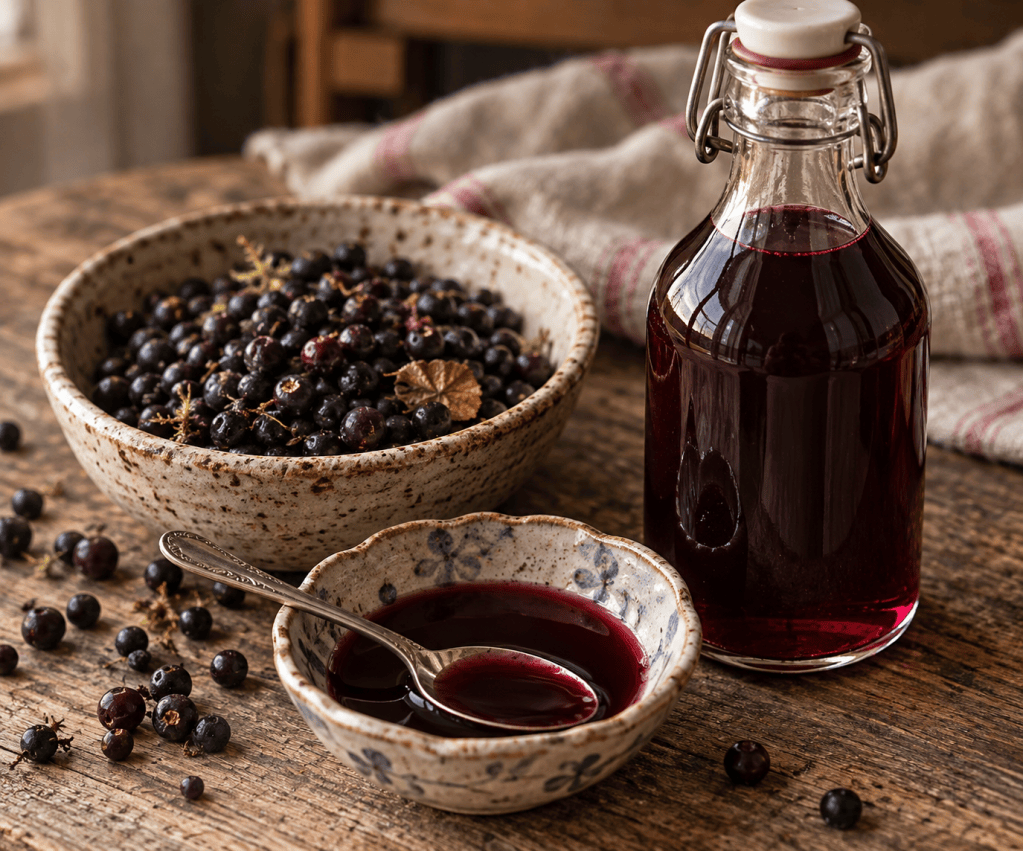
Made from handpicked Alaskan mossberries, this richly colored syrup captures the berries’ distinctive earthy, tart flavor in a smooth, deep-purple pour. With just berries, water, sugar, and a little lemon juice, it’s a lovely homemade addition to pancakes, yogurt, desserts, sparkling drinks, and cocktails.
Makes: Varies with the amount of juice extracted, approximately 3–4 cups
Prep Time: 10 minutes
Cook Time: 15–20 minutes
Total Time: 35–45 minutes, including straining
Ingredients
- 4 cups fresh or frozen mossberries, cleaned
- 2 cups water
- ¾ cup granulated sugar per 1 cup strained mossberry juice
- 1 Tbsp bottled lemon juice per 1 cup strained mossberry juice
- Tiny pinch of fine sea salt
Instructions
- Simmer the berries
Place the mossberries and water in a medium saucepan. Bring to a gentle simmer over medium heat. Cook for 10–15 minutes, stirring occasionally and gently crushing the berries with a potato masher or the back of a spoon to release their juices. - Strain and measure
Pour the cooked berries through a fine-mesh strainer into a bowl or measuring pitcher. Allow the juice to drain, pressing gently if desired. For a clearer syrup, avoid pressing the solids and allow the liquid to drain naturally. Measure the strained juice to determine how much sugar and lemon juice to add. - Sweeten and Finish
Return the strained juice to the saucepan. For every cup of juice, add ¾ cup sugar and 1 tablespoon bottled lemon juice.
Stir over medium heat until the sugar dissolves completely. Bring to a full boil and cook for approximately 1 minute, stirring as needed. Remove from heat. Add a tiny pinch of fine sea salt. Allow the syrup to cool slightly before transferring it to clean, heat-safe bottles or jars. Refrigerate promptly, or freeze in suitable containers for longer storage.
From the Table
Picking mossberries is not a particularly graceful activity.
The berries grow low to the ground, tucked among thick carpets of moss, which means gathering them requires a surprising amount of bending, crouching, reaching, and twisting. You find yourself becoming something of an on-the-ground acrobat, stretching one way to reach a cluster of berries and then turning yourself around to gather another handful just out of reach.
But the moss itself is extraordinary.
It’s incredibly soft underfoot, almost like walking across a deep, springy cushion. In places, it’s so thick that even the tiny berries seem protected by it. You might expect to crush them as you walk, but instead they simply disappear down into the moss, slipping beneath your feet rather than being flattened.
The berries themselves are small, nearly black when ripe, and easy to overlook until you begin looking closely. Once your eyes adjust, you start noticing them everywhere, little dark dots nestled among the green.
Gathering them is slow work. There is no standing upright and filling a basket in a few minutes. You have to get down close, move carefully, and pay attention to what’s growing just beneath you.
Mossberries have an earthy tartness that makes them especially interesting in the kitchen. When simmered and strained, they produce an intensely colored juice that becomes a beautiful syrup with just a little sugar and lemon.
It’s a wonderful way to make use of a berry that asks you to get down on its level before giving up its harvest.

Field Notes:
The flavor of mossberries. Mossberries have an earthy, tart character quite different from sweeter cultivated berries. The sugar softens their sharpness without completely obscuring their distinctive flavor.
Fresh or frozen berries. Either works. Frozen mossberries can go directly into the saucepan without thawing first, although they may need a little additional time to begin simmering.
For a clearer syrup. Allow the cooked berries to drain through a fine-mesh strainer without pressing. For an especially clear finish, strain a second time through a dampened fine filter or tightly woven cloth. Pressing the berries extracts more liquid but produces a cloudier syrup.
Adjusting the sweetness. The standard ratio is ¾ cup sugar per cup of strained juice. For a more tart, thinner syrup, reduce the sugar to ½ cup per cup of juice. Keep in mind that reduced-sugar syrup will have a different consistency and may not keep as well.
A little lemon goes a long way. Bottled lemon juice adds brightness and helps balance the sweetness. It does not, however, make this particular recipe safe for room-temperature storage.
Storage and freezing. Keep the finished syrup refrigerated in clean, airtight containers and use within approximately 1–2 weeks. For longer storage, freeze in freezer-safe jars or containers, leaving at least 1 inch of headspace for expansion. This recipe has not been validated for shelf-stable canning.
Save the juice for later. If you aren’t ready to finish the syrup immediately, the strained unsweetened juice can be refrigerated for 2–3 days or frozen. Add the sugar and lemon juice when you’re ready to prepare the syrup.
More than pancake syrup. Stir into sparkling water, drizzle over vanilla ice cream, swirl into yogurt, mix into cocktails or mocktails, or use as the starting point for a sweet-tart glaze.
This post contains affiliate links. If you purchase through these links, I may earn a small commission at no additional cost to you.
Join Small Wonders
Stories, nature, books, family connection, recipes, overlooked history, and the small things that make life feel full.
No schedule. No noise. Just occasional notes when there’s something worth sharing.
