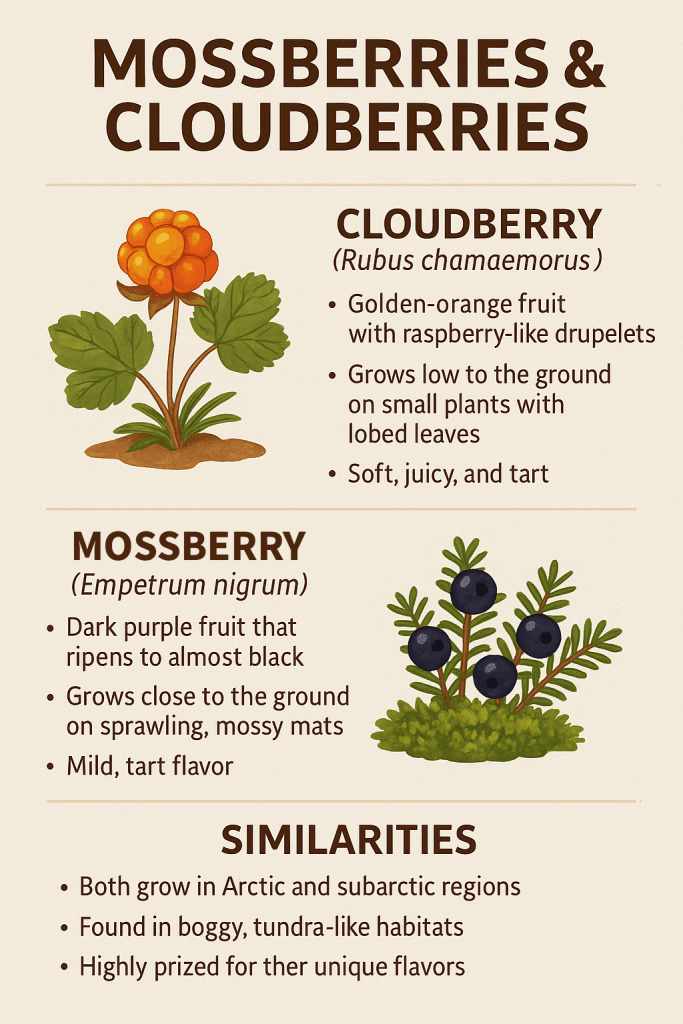
I spent the entire summer in quiet anticipation, waiting for the berries on St. Paul Island to ripen. There are two main foraged berries here: the tart, deep purple mossberries and the glowing, honey-sweet cloudberries. Both grow low to the ground, tucked into the moss. And oh, what moss it is, centuries thick, so dense and springy that it spans the rocks and holds your weight. To pick berries here, you crouch or sit right on that soft green carpet, a bed thousands of years in the making.
The mossberries are the more plentiful of the two, though they like to hide among the greenery. They grow small, dark, and glossy, and when they’re ripe they fall easily into your hand with just a brush of your fingers. They’re delicious, tart, and abundant, almost as if the tundra itself has tucked them away for those who know where to look.
Cloudberries, on the other hand, are the prize. Their leaves look like strawberry plants, and their berries are made up of large seed-cells like raspberries, though fewer in number. When ripe, they change from bright red to a softer orange-red, and the little petals at the base of the berry curl back from the fruit. Unlike mossberries, cloudberries are fragile and short-lived. Once overripe, they collapse into stickiness in your hand, as fleeting as summer itself.
All season long, I went back again and again to check their progress. The first time I went picking was with some of Carlos’s coworkers. We laughed and searched, finding just enough mossberries for a small cup each. Later, I went with the wife of our VPSO, and though we came home with only a few tablespoons of berries, we had the gift of a long, lovely conversation, sitting together on the mossy tundra at the top of Kaminista.
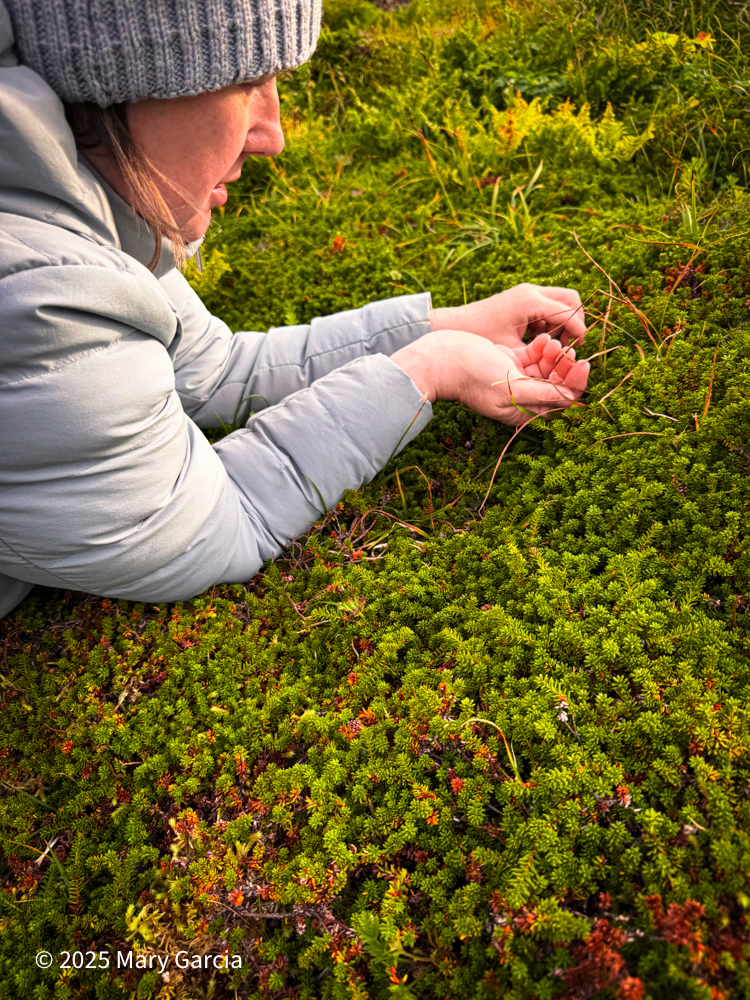
Finally, on a late-summer day, Carlos and I went together after he was done with work. This time, the mossberries were plentiful, and the cloudberries were finally ready, though many were already too ripe to keep. We picked carefully, gathering what we could, and carried home a cup of cloudberries and 2–3 cups of mossberries. I was both excited and a little nervous. I had never tasted cloudberries before, and their sticky texture and unfamiliar smell gave me pause. I tried making lollipops with them, but without a good thermometer, the candy didn’t set right. The flavor was wonderful, though, tart mossberries with the depth of cloudberries, softened by sugar.
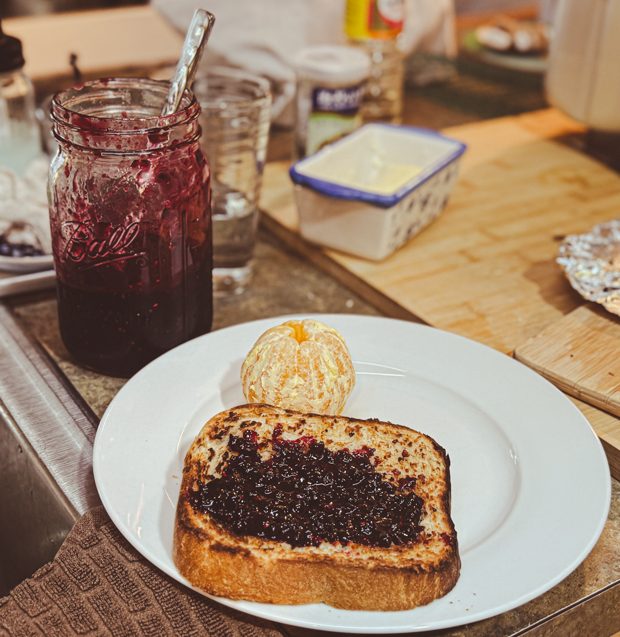
Later, with fall in the air, I turned to something more familiar: jam. This time, I used mossberries alone, since the cloudberries had passed their best. I added warm fall spices: cinnamon, cardamom, and nutmeg, and a touch of sea salt to balance the sweetness. The result was the absolute best jam I’ve ever made.
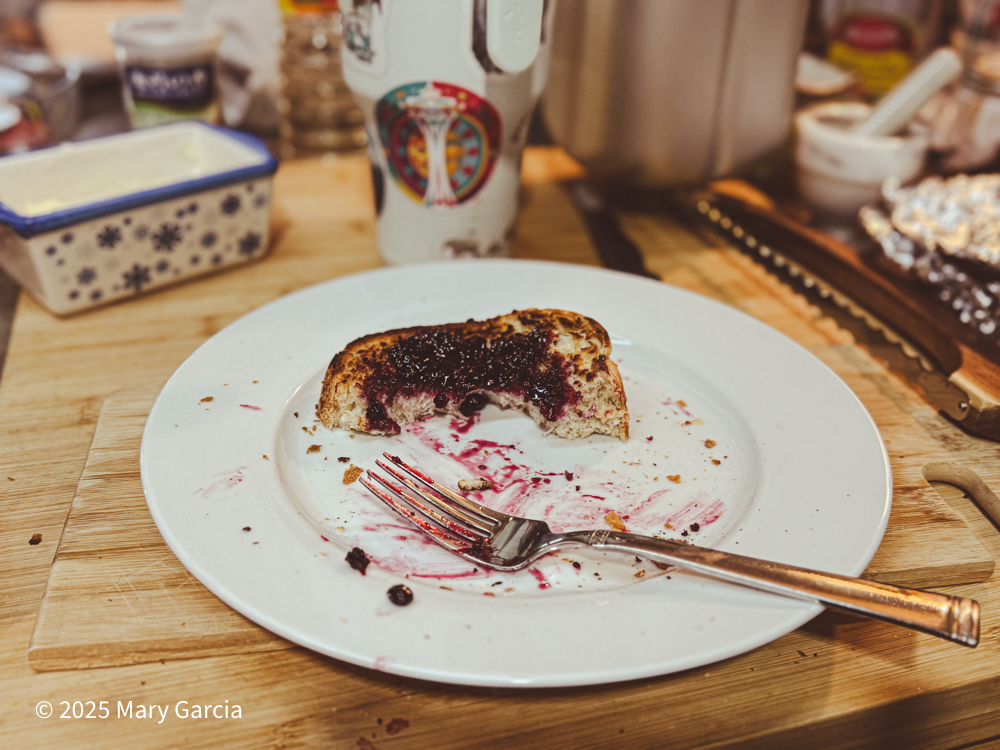
Mossberries surprised me with how small and smooth they were, not nearly as seedy as I expected. Because I had already used some of my harvest, I supplemented with half a cup of frozen mixed berries from the store, and the jam came out beautifully. I made it on a Friday, and by Monday it was nearly gone. We spread it thick on homemade bread with butter and Swiss cheese, used it as syrup, and shared spoonfuls with teenagers who stopped by for a kitten visit. Sweet and tart, warm with spice, and comforting with every bite, it reminded me of Wisconsin cheddar paired with apple pie. I have included the recipe below. If you do not have access to mossberries or cloudberries, I would suggest switching out the Arctic berries for frozen mixed berries, keeping everything else the same.
Waiting all summer for those mossberries made the harvest taste all the sweeter. And now, tucked in a jar, I have a little bit of tundra, a little bit of autumn, and a whole lot of patience rewarded.
For the full recipe, visit my recipe vault, The Mossy Table.

Leave a comment