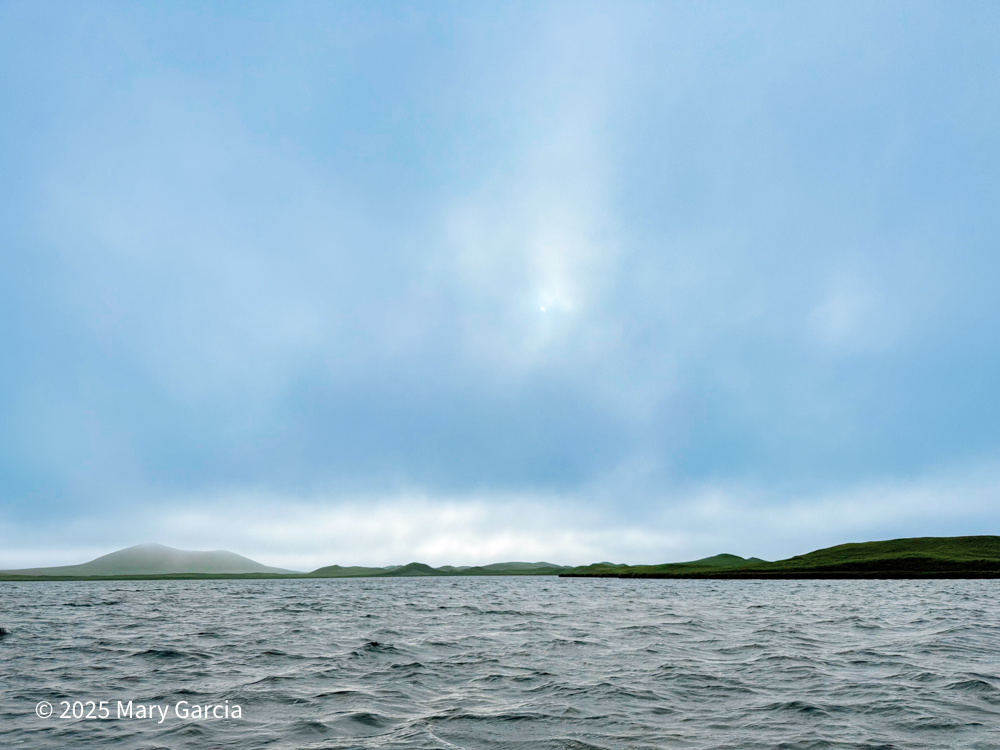
It was a beautifully foggy Saturday on St. Paul Island — as most days here are, at least for part of the day. The temperature lingered in the low 50s, dipping into the 40s with the wind chill. We layered up as best we could: waterproof pants, rain jackets, and plenty of warm clothes underneath. Just in case, we packed dry clothes for later.
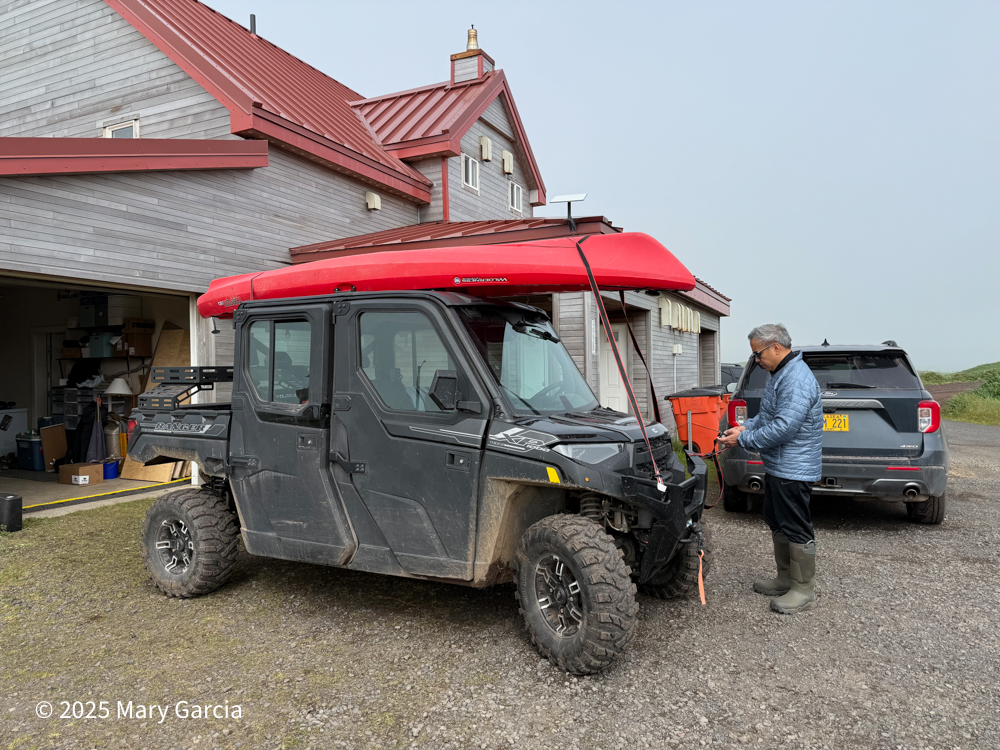
We enjoyed a slow Saturday morning, sleeping in and lingering over a breakfast Carlos made, eggs, potatoes, and bacon, before strapping the borrowed kayak to the top of the Betty, our Polaris, and setting off for Sheep Lake.
We launched from the west shore of Sheep Lake, pushing the kayak into a light breeze. Paddling east, the stillness of the water surprised us. On the northern side, kittiwakes were circling something of interest. For a while, I had to peel off layers as I grew warm from the steady work of paddling.
The water was shallow – never more than four feet deep – and we could hear the steady crash of Bering Sea waves just beyond the sand dunes. Though the paddle east was easy with the wind at our backs, we knew the return trip would be more difficult.
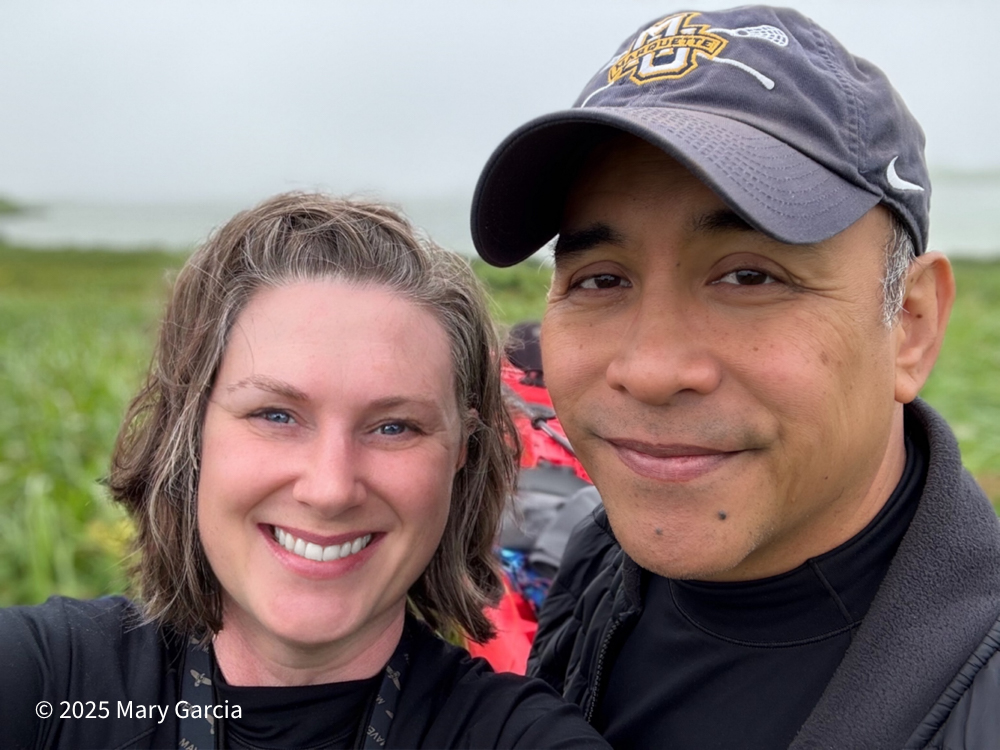
At the north eastern edge of Sheep Lake, we beached the kayak on a sliver of sand and stepped into tall meadow grass. From there, it was a short but heavy carry across to Big Lake, about 100 yards. Carlos shouldered most of the weight while I helped steady.
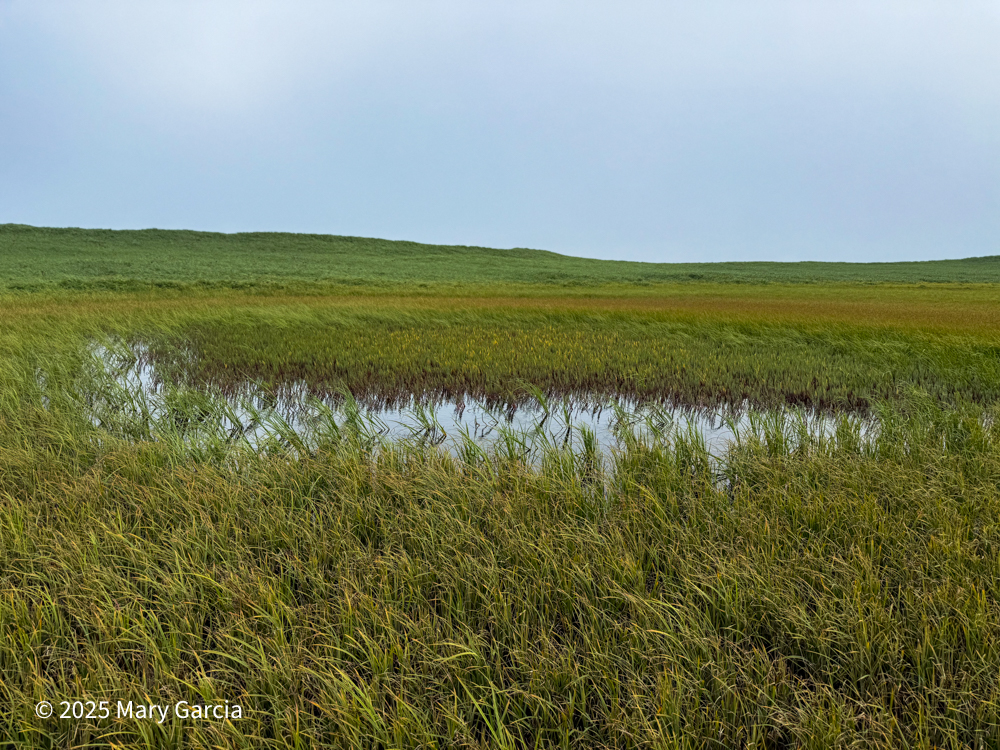
The wetlands were already showing signs of fall. Seeded grasses brushed against our legs, and we passed patches of diamond-leaf willow with their fuzzy catkins, clusters of monk’s hood still glowing purple across the fading tundra, and mushrooms I couldn’t yet identify.
After scouting a route to avoid deeper marsh, we returned for the kayak and slipped it into Big Lake.
The shoreline of Big Lake shifted between three moods: sandy coves, sharp black volcanic rock, and rounded grass-covered mounds that looked like puffballs where the rock disappeared under moss.
Birds wheeled overhead — gulls and kittiwakes — and in the shallows we could see stickleback fish, about four inches long after their summer of growth. We rested briefly at a sandy cove before following the shoreline halfway north, then turned back when the wind shifted in our favor.
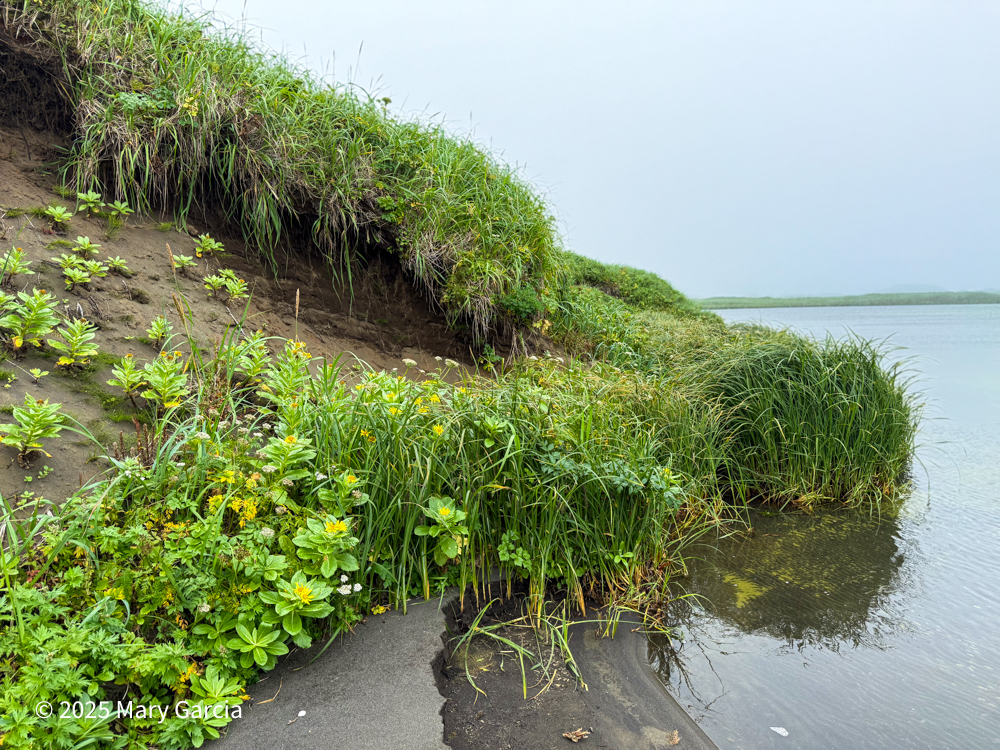
The portage back to Sheep Lake was easier with the route fresh in our minds. Still, the volcanic ground hid its tricks — moss and scoria masking deep holes. Near the shore I stumbled into one, falling hard but thankfully onto sand instead of water.
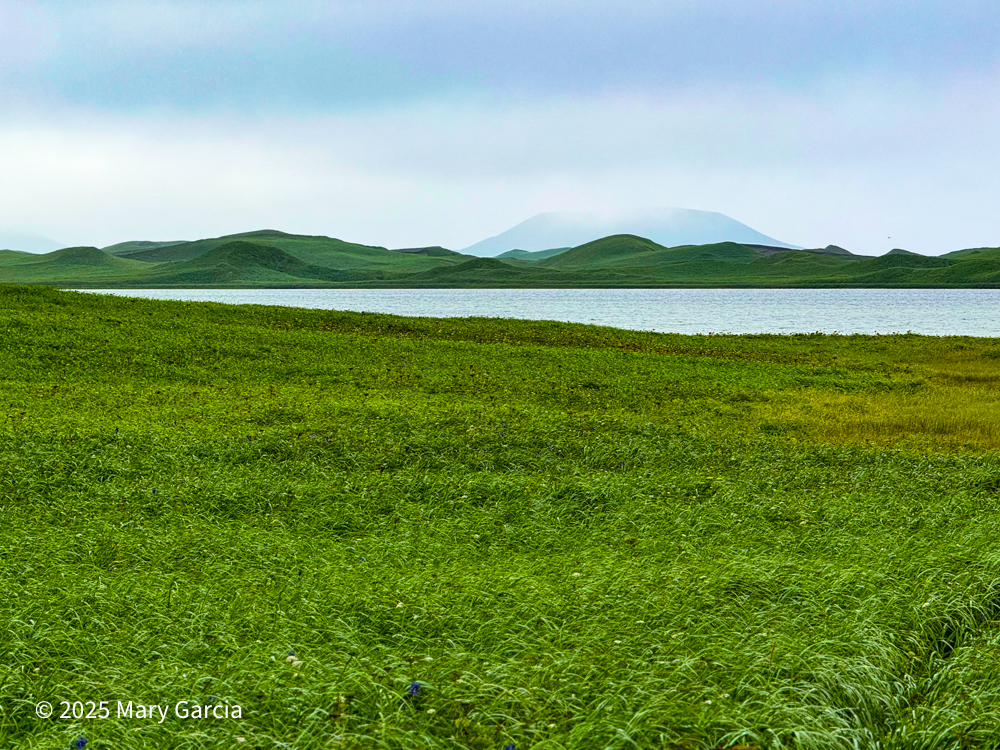
Back on Sheep Lake, the return paddle was far rougher than the easy ride out. Wind pressed against us, small waves tipped white crests, and the kayak rocked enough that we steadied ourselves with care. Betty was a welcome sight on the far shore.
As we made our way back toward town, two fox cubs darted into the road ahead of us. They ran like bunnies, bounding through the fog, and we followed them for several hundred yards as they led the way. They seemed happy, almost playful, as if they were welcoming us back to dry land. Encounters like that never fail to feel like gifts here.
By the time we reached home, the idea of pizza sounded good, but we had a pound of beef thawed in the fridge. So instead, I made meatloaf (in an instant pot), using homemade ketchup, freeze-dried celery, peppers, and mushrooms, with pilot bread and oatmeal as binders.
It was the perfect ending to a day of paddling, portaging, falling, laughing, and being led home by foxes.
Field Notes
Diamond-Leaf Willow (Salix pulchra)
A hardy shrub common on the island’s wetlands. In fall, its catkins are soft and fuzzy, a striking contrast against fading grasses.
Monk’s Hood (Aconitum delphiniifolium)
Still scattered across the wetlands, its deep violet flowers add a splash of color to the tundra in late summer. Best admired, not touched. Monk’s Hood is poisonous.
Stickleback Fish
Tiny fish, about 4 inches long after a summer of growth, often seen darting in the shallows of Big Lake. Used for bait.
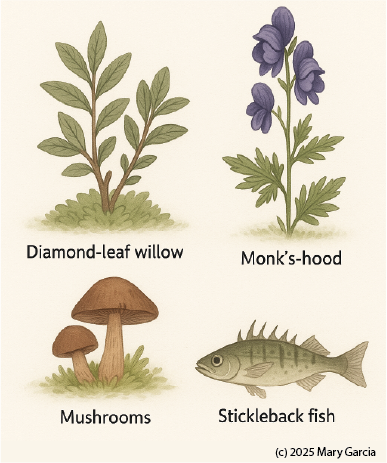
Mushrooms
We came across clusters of mushrooms during the portage. From the photo, they appear to be a Cortinarius species — known for their rusty-brown spores and web-like veil. While beautiful, many in this family are toxic. Best admired, not eaten.

Leave a comment