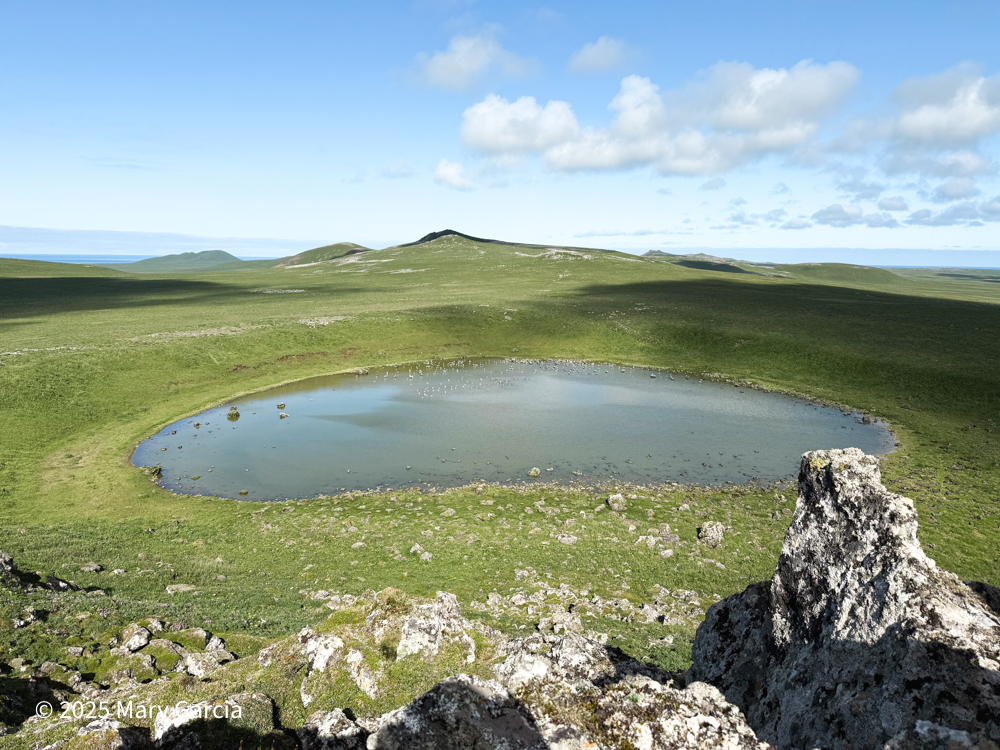
If you have read my earlier posts, you will know that Kittiwake Lake had already defeated me twice. The first time, I wandered without luck. The second, I thought I had the right hill, but fog swallowed the landscape and left me no closer. By the time I set out for my third attempt, I had a little insider knowledge and the day began clear, although I could see a haze on the horizon that warned the fog might return.
I started at Ridgewall Hill, the supposed midpoint for descending into the right area. I had been told the lake sits tucked away in a small depression. Trouble was, maps here do not always translate neatly to the ground. While Ridgewall Hill was labeled on the map I carried, there are no trail signs, no markers, no carved posts declaring, “You’ve arrived.” Out on the tundra, one hill can look much like another, and what you think is Ridgewall Hill might just as easily be something else entirely.
That is part of the challenge of hiking this island. Maps are guides, not guarantees. The one I carried was pulled from a book on local plant life. It showed a few trails and general landmarks, but nothing that could tell me for sure where I stood. Finding your way here requires as much instinct as orientation.
So I climbed. Once I reached the summit, I scanned the horizon and spotted a bog to the northeast, the same one marked on my map. That small confirmation boosted my confidence. Maybe, just maybe, I was in the right place this time. I turned west, descending carefully.
Partway down, I came across a pond with a pair of deer antlers lying beside it. Weathered and mossy, they felt like a secret offering from the tundra. The pond was not on my map since small features like that rarely are, but I pressed on, zig-zagging across the land: north, west, south, west again, then north. Each pass stirred the nagging uncertainty that I was repeating mistakes. The ground beneath me was loose with tephra, and every step sank just enough to sap my energy. I could feel the weariness building, and more than anything I wanted to conserve my steps, to make each one count.
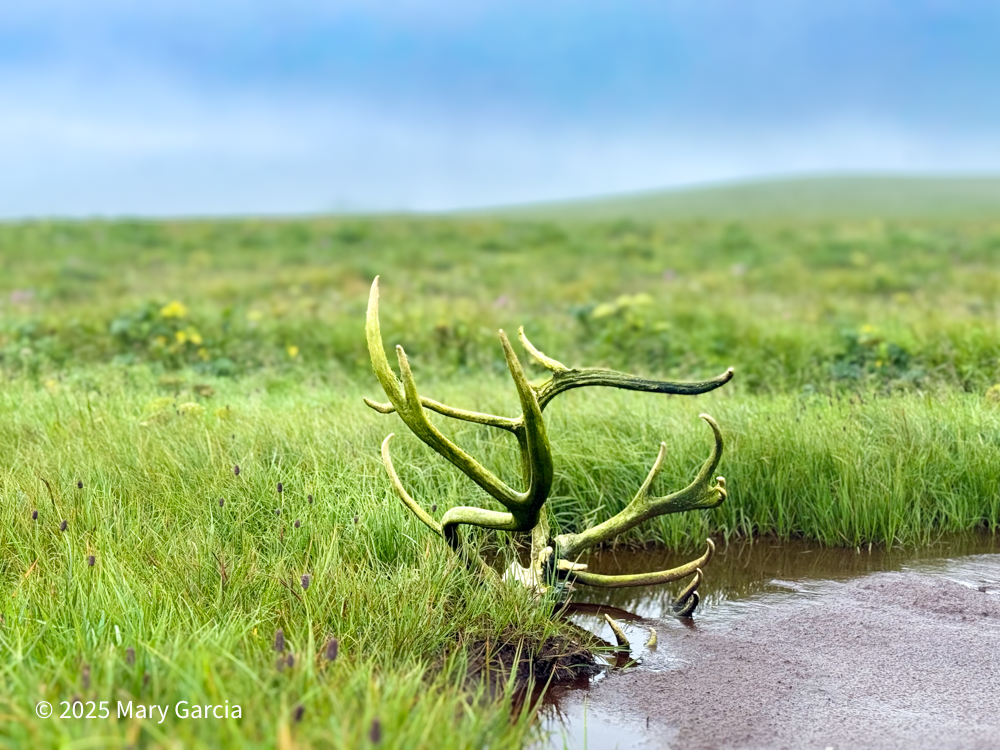
As the tiredness started to set in, so did the fog. For a moment, I considered turning back. Getting lost out here was the last thing I wanted. But it was only just beginning to roll in, soft at the edges. I told myself that as long as I could see Ridgewall Hill, I would be able to find my way home.
I paused to take a break, and that is when I saw them: kittiwakes circling overhead. It struck me as odd since they rarely venture this far inland. I usually only saw them along the cliffs or over the Salt Lagoon. Suddenly, it clicked. This was their domain. Maybe their flight held the clue.
I turned west and followed them. Ahead, the land dipped into a hollow, and I remembered the advice that the lake lies in a depression. I quickened my pace, hiked down into that low spot, and there it was, Kittiwake Lake at last, calm and hidden, revealed by the birds themselves.
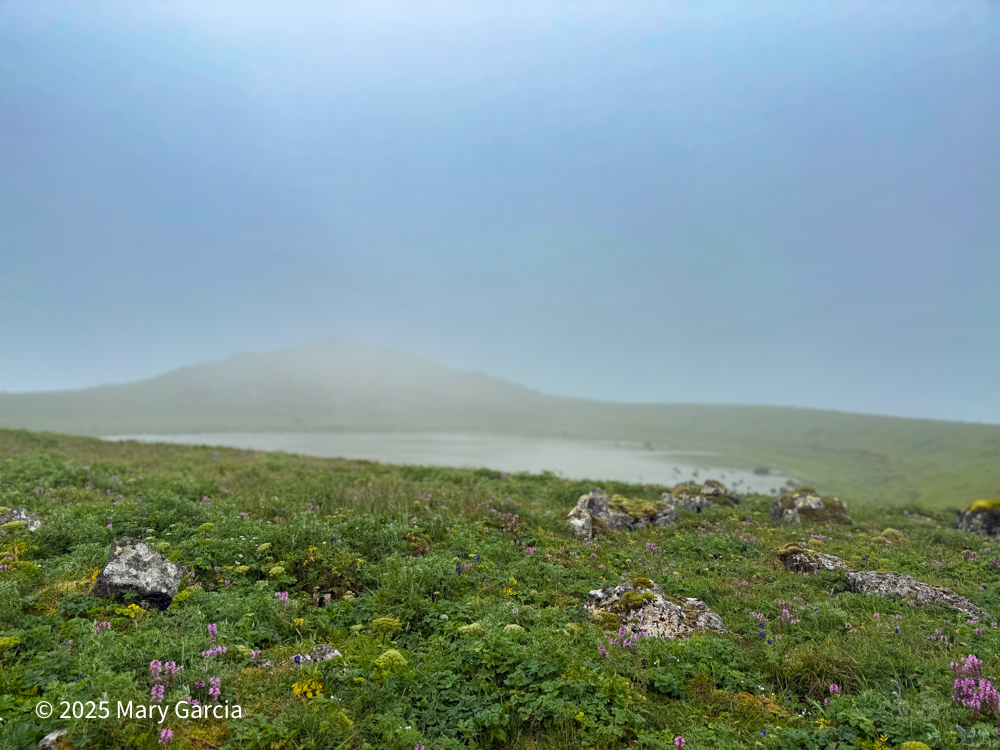
It was beautiful, a still lake tucked beneath a large hill to the west. Around its edges, the ground was lush and green, with moss-covered rocks and a scatter of wildflowers. The kittiwakes seemed perfectly at home, resting on the many rocks that jutted up from the center of the water, flying in and out toward other parts of the island. As I circled the shoreline, I found more signs that this place belonged to the animals. Another set of reindeer antlers lay before me. Only this time, not just the antlers but the full skeleton, bleached and silent on the ground.
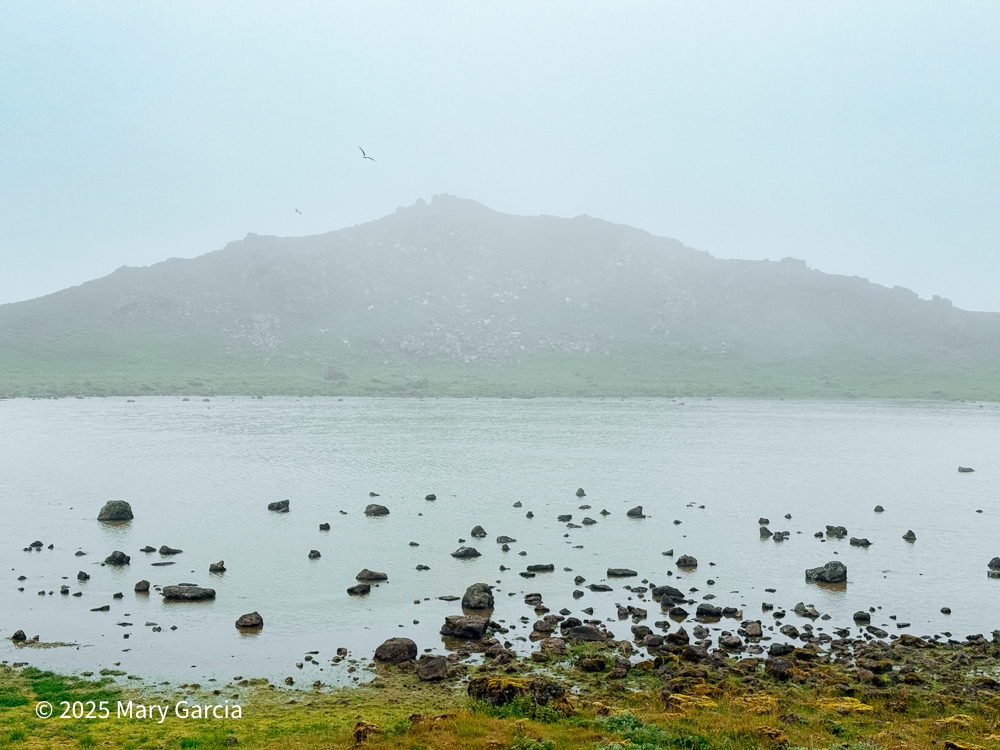
On the west side, a massive tephra structure rose up from the landscape. Curiosity pulled me upward. I wondered if the lava tubes might be hidden there. I climbed carefully, testing each moss-covered rock with my walking stick before shifting my weight. No tubes revealed themselves, but from the summit I caught sight of something further west. When I climbed down and walked toward it, I found what I had been hoping for: moss-covered lava tubes, damp with island moisture, glowing a brilliant emerald green in the light.
The tube was steep, too dangerous to explore alone, so I held back. Instead, I circled the area, studied the land, and promised myself I would return with Carlos. Now, at last, I knew the way.
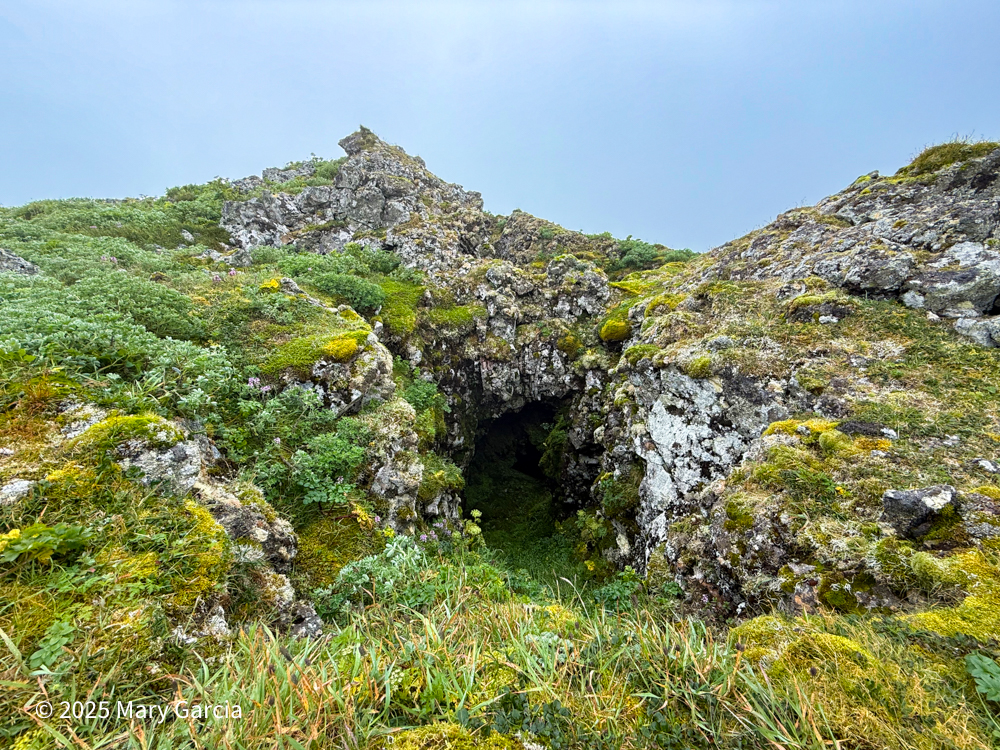
Finding Kittiwake Lake was not just about reaching a hidden spot on the map. It was about learning how to pay attention. The antler pond, the zig-zag trek across the tephra, the circling kittiwakes, the emerald lava tubes. All of it reminded me that discovery here comes from observation, persistence, and humility. The land does not always reveal itself on the first try, and it does not bend easily to human plans.
That day, the lesson was clear. When you do not know the way, follow the animals. They have known this island far longer than I have. The kittiwakes led me to their lake, and the trails and reindeer bones told me who else calls it home. Even the moss itself, clinging to volcanic stone, showed me the strength of life in this place.
Now, whenever I set out across the tundra, I carry that reminder with me. The island speaks through its animals, its plants, and its stones. The trick is to quiet myself enough to listen.

Leave a comment